
Bio Feature: The Raw Story Of Longevity And Resilience
Bio stories of elite tennis players often focus on Grand Slams, but the journey of Heather Watson offers a richer view of resilience, adaptation, and longevity that defines the editorial voice of Heatherwatson. As one of Britain’s most enduring WTA competitors, Watson’s career stretches across more than a decade of tour-level battles, Olympic appearances, and pressure-filled Fed Cup ties. This in-depth feature unpacks her evolution with updated data to 2026, serving fans who want more than surface-level results.
Early life and junior Bio foundations
The early chapters of Heather Watson’s Bio explain how a player from Guernsey grew into a junior world champion and future British No.1. Born on May 19, 1992, Watson trained at the Nick Bollettieri academy in Florida, sharpening an all-court style suited to hard courts and grass. On Heatherwatson, we track how these formative years created the tactical base that still shapes her match patterns in 2026.
Family background and Guernsey roots
Any serious Bio of Watson must start with her multicultural background, combining British and Papua New Guinean heritage. Growing up on the Channel Island of Guernsey, she learned to compete on windswept outdoor courts, which helped her develop timing and footwork under pressure. Local support funded early trips to junior events, giving her vital exposure to international competition before she moved full-time to the United States for training.
Junior titles and world No.3 ranking
Watson’s junior Bio peaked when she won the 2009 US Open girls’ singles title, a landmark for British tennis at the time. That run pushed her to a career-high junior ranking of world No.3, confirming her as a genuine prospect on the ITF circuit. Her success in juniors was built on consistency, court coverage, and a reliable first serve rather than one overwhelming weapon, traits that would carry into her professional transition.
Transition from ITF to WTA Tour
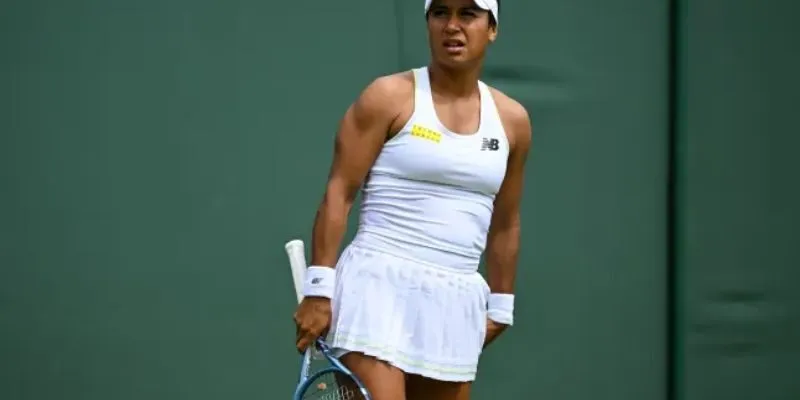
The next phase in her Bio charts a careful step from ITF events to the WTA Tour, where she accumulated titles at $25k and $50k level before targeting Premier draws. Early wild cards at Wimbledon and other grass events allowed her to test her game against top-50 opponents. By 2012, she had cracked the top 100, signalling that her junior pedigree could translate into sustained main-tour relevance rather than a brief surge.
Professional Bio: peak seasons and ranking milestones
Watson’s professional Bio is defined by a steady climb rather than a single breakout year, with several peaks spread across the 2012–2022 window. On Heatherwatson, we map these seasons through ranking data, title runs, and performance metrics on different surfaces. This section highlights how she established herself as a dependable top-100 presence and a dangerous floater in Grand Slam draws.
First WTA title and top-50 breakthrough
A crucial chapter in her Bio came in 2012, when she won her maiden WTA singles title in Osaka. That victory made her the first British woman since Sara Gomer to claim a WTA singles trophy, ending a long national drought. The Osaka run, combined with consistent results at International-level tournaments, pushed her into the top 50 and confirmed that her physical and mental game could survive long weeks on tour.
Ranking progression and longevity
Examining her Bio through ranking trends shows impressive longevity in a physically demanding era. Watson hovered between world No.38 and No.120 for much of her prime, repeatedly rebuilding her ranking after injury spells or dips in form. She re-entered the top 100 multiple times, showing an ability to reset training blocks, refine tactics, and target ranking points at events where her game matched conditions.
Surface preferences and playing style
A complete Bio must address playing style, and Watson is best described as an all-court counter-puncher with proactive instincts. She is most comfortable on grass and medium-paced hard courts, where her flat backhand and compact forehand can redirect pace. Her movement, court sense, and net skills enable frequent transitions forward, especially in doubles, making her a versatile competitor in varied tactical scenarios.
| Season | Year-end singles ranking | Titles (WTA/ITF) | Best Grand Slam result |
| 2012 | 49 | 1 WTA | 3R Wimbledon |
| 2015 | 55 | 1 WTA | 3R Wimbledon |
| 2016 | 75 | 1 WTA | 3R Australian Open |
| 2022 | 93 | 0 | 4R Wimbledon |
Grand Slam Bio and iconic Wimbledon battles
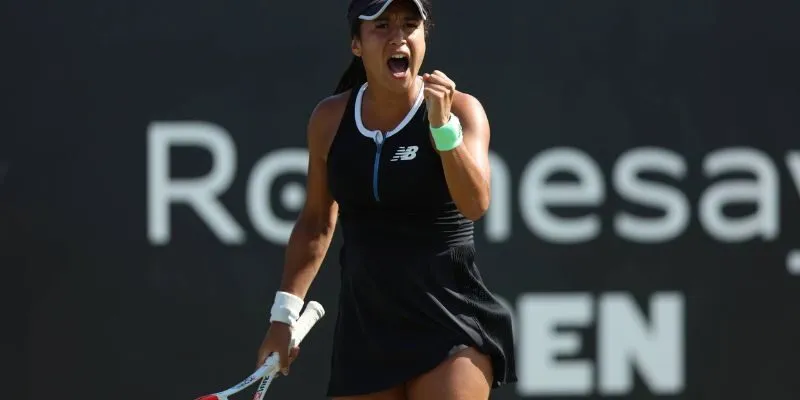
For British fans, Watson’s Grand Slam Bio is inseparable from her performances on the lawns of Wimbledon. Here on Heatherwatson, we focus on the signature matches that shaped her reputation as a fearless centre-court competitor. From early breakthroughs to late-career deep runs, her Slam record reflects both tactical maturity and mental resilience.
Early Slam breakthroughs
Watson’s Slam Bio began to gain traction when she reached the third round of Wimbledon in 2012, becoming the first British woman in a decade to go that deep. Similar third-round showings at the Australian Open and Roland Garros underlined her ability to adapt to different surfaces. These results secured valuable ranking points and seeded status at smaller events, easing her path through qualifying-heavy draws.
The near-upset of Serena Williams
No Bio of Watson is complete without the 2015 Wimbledon classic against Serena Williams. Leading the world No.1 by a break in the final set, she pushed one of the greatest champions to the brink before narrowly losing 7–5 in the decider. The match showcased her return game, tactical variety, and competitive courage, and it remains a reference point whenever analysts discuss British performances on Centre Court.
Later-career runs and 2022 resurgence
Her Grand Slam Bio gained a fresh chapter in 2022, when she reached the fourth round of Wimbledon for the first time. That run, fuelled by aggressive returning and improved serve percentages, arrived at a stage when many expected her results to decline. It reinforced the narrative of a player who continually finds ways to extend her prime and stay relevant against younger, more powerful opposition.
Doubles, team events and leadership Bio
Beyond singles, Watson’s doubles and team-event Bio reveals another dimension of her career impact. On Heatherwatson, we track her Olympic appearances, Fed Cup contributions, and WTA doubles titles to understand her broader value to British tennis. These formats highlight her communication skills, net play, and willingness to shoulder responsibility in high-stakes ties.
WTA doubles titles and mixed success
Her doubles Bio includes multiple WTA titles and strong mixed doubles showings at Wimbledon. Partnering with different styles, from big servers to baseline grinders, she has demonstrated tactical flexibility and sharp reflexes at the net. These achievements have kept her schedule busy even when singles rankings dipped, allowing her to stay match-fit and financially stable on tour.
Olympic appearances and national pride
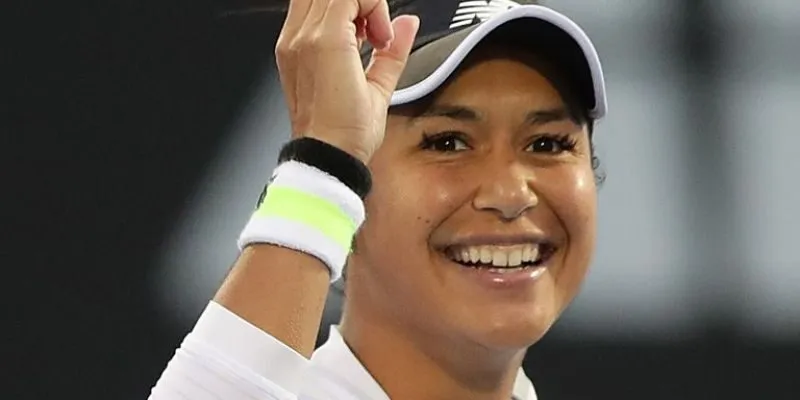
In a complete career Bio, Olympic participation carries special weight, and Watson has represented Great Britain at multiple Games. Competing in singles and doubles, she embraced the unique pressure of team-based national events. Her presence in Olympic squads reflected trust from national selectors and underlined her status as a reliable, experienced competitor in multi-sport environments.
Billie Jean King Cup contributions
Watson’s team-event Bio is also defined by her service in the Billie Jean King Cup, formerly Fed Cup. Frequently selected for crucial singles rubbers and doubles deciders, she delivered gritty performances in away ties on unfamiliar surfaces. Younger British players often cite her as a mentor figure, acknowledging how her preparation habits and composure under pressure helped raise squad standards.
>>> Read More: Gallery Spotlight: Courtside Evolution Of A Tennis Icon
Conclusion
As the tennis landscape evolves, Heather Watson’s enduring Bio continues to offer lessons in adaptability, professionalism, and realistic goal-setting for aspiring players. For readers of Heatherwatson, her journey illustrates how intelligent scheduling, tactical evolution, and mental resilience can extend a career well beyond its expected peak.